What do you do once
you have arrived?

A house in the middle of Oslo turned ten this summer. It has reached what it set out to do. The plan was carried through, and it worked.
That is a fortunate position. It also creates a vacuum. Where do you go when the direction you have followed for ten years has been reached, and the next one does not exist yet?
Sentralen is now laying the plan for the next ten years, and I have been brought into that process as someone who reads how an organisation actually moves: Where the forces travel, and where they come to a stop.
I am not going to write their strategy alone. I am going to make it possible to discover what it should be.
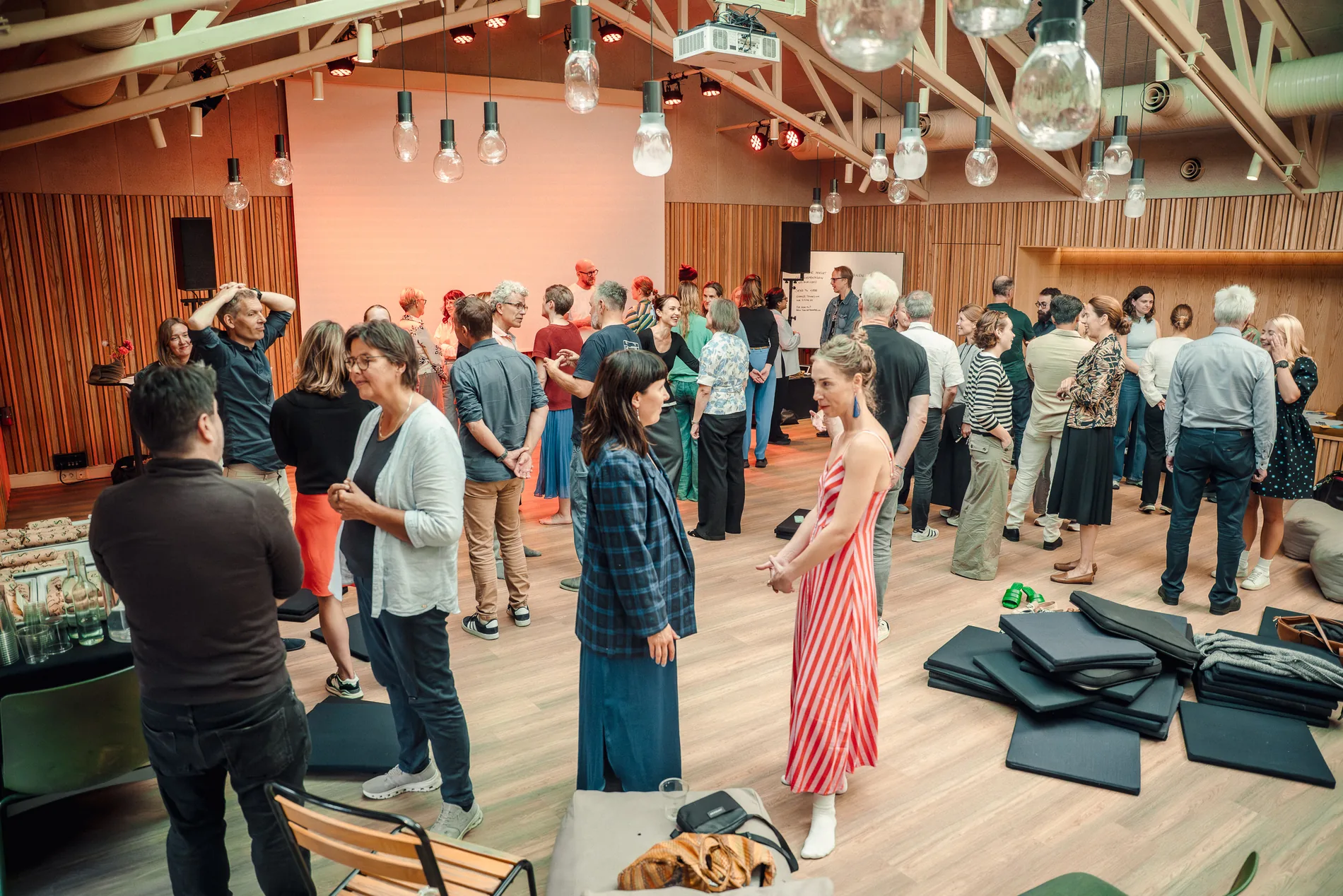
The word no one quite manages to translate
Sentralen is owned and run by Sparebankstiftelsen DNB, and the foundation has sharpened its mandate around a single word: Fellesskap, for present and future generations. Its opposite, the thing they want to bring to an end, is utenforskap. Being left outside.
Fellesskap is hard to get hold of. There is no precise English word for it. Community is too loose, togetherness too soft. And the most important part is not the fellesskap itself. It is the feeling of it. The belonging. A shared identity that does not require us to agree, but that holds even when we do not.
A feeling cannot be adopted in a document. It has to be felt.
A house like this fills up with events, hundreds a year, and they are easy to count. But an event is only an event, unless somebody is moved by it.
That is where the arrow starts. If people are moved, the room becomes a meeting place, somewhere a person actually meets someone they did not know. And meeting places that repeat eventually become a fellesskap that holds even when the people inside it disagree. This is really what every event is reaching for. It is the whole point of coming together.
An event without that upward arrow is entertainment. With it, it is infrastructure.

Why the body belongs in strategy work
Since I was young I have read how people move. First on stage, later in leadership teams and boardrooms, and in the companies I have built and invested in myself. The same reading, different rooms.
The way we move is the way we lead. The way we work together. The way we shape a society. It is not a metaphor. It is the mechanism.
A group knows more than it manages to say. The knowledge is already there, but much of it is unconscious, and it sits in what goes unsaid.
In an ordinary meeting, only the person who takes the floor gets to deliver. What comes out depends on who dares, not on who knows.
In movement, everyone is working at once. No one waits their turn, and no one has to put it into words first.
So I translate the language of strategy into movement. Not to make it simpler than it is, but for two reasons. The first is that the group gets access to what it already knows without having said it. The second is that the professional vocabulary stops standing in the way. Words like strategy and operationalisation make people feel they are not clever enough, and then they go quiet. A language everyone knows in the body does the opposite.
Translated, a strategy model looks like this: The purpose is the engine, the thing that makes us move at all. The problem is the terrain. The solution is the route through it. The capabilities we need are the gait. The values are the direction.
And then the part that makes this more than an exercise. Ask a group to describe the fellesskap they want, and you get words. Ask them to walk around the room as if they are already inside that fellesskap, as if the belonging is already there, and something happens immediately. The chest opens. The distances between them change. They have the quality in the body before they have found the words for it.
A vision is not a point far ahead. It is an instruction to the body today.
What they knew, without having said it
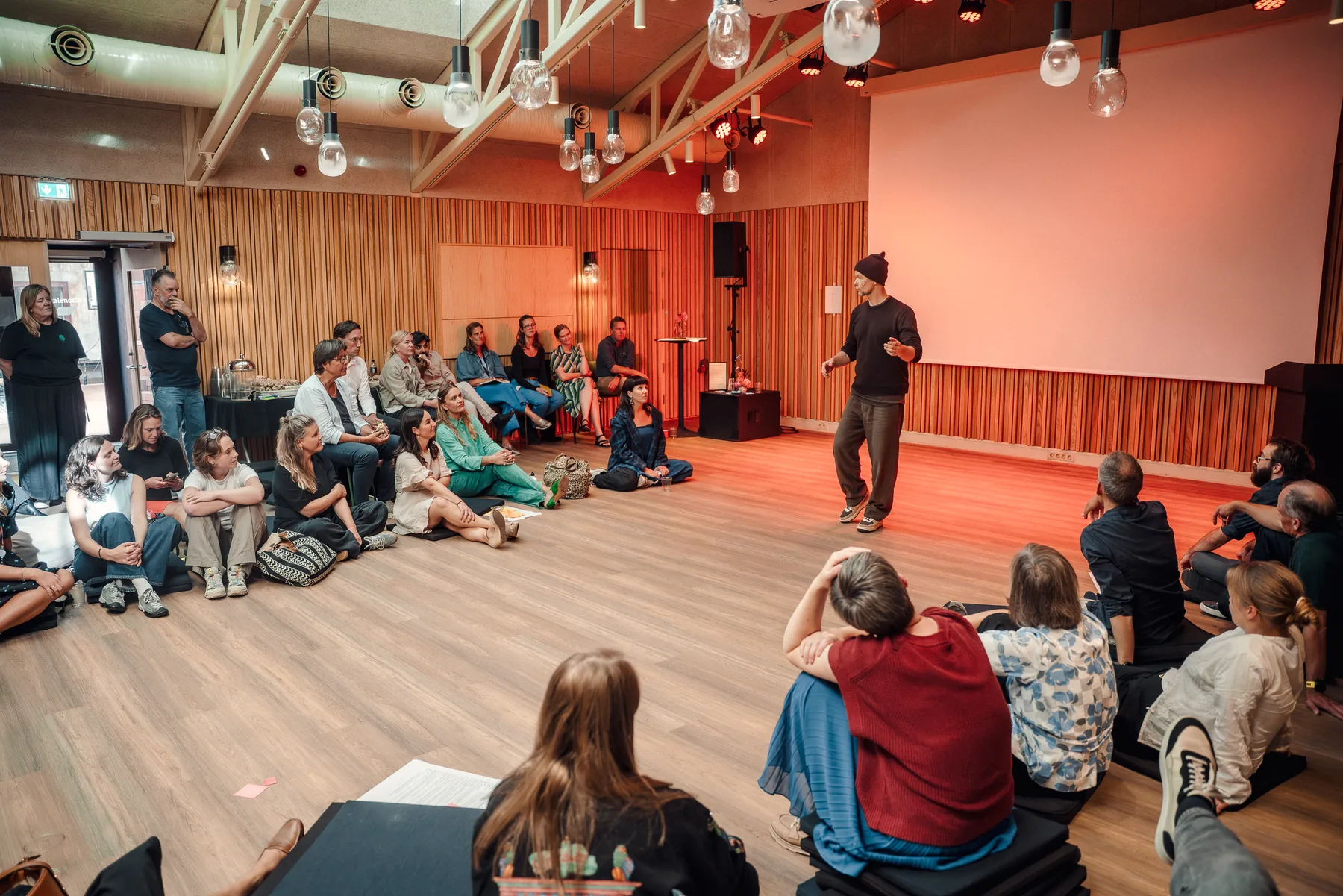
Six people from the house. Four hours.
One stick each. Build a figure together, with a shared space in the middle, and move it through the room without speaking.
The way they first placed the sticks, there were two spaces instead of one. I heard myself say it before I had time to think it: You cannot have two goals. You have to have one. Otherwise the organisation is divided.
It went quiet for a few seconds.
Then they found the single space, and the flow arrived the moment everyone's attention gathered towards it. And that was when the conversation I was after began, the one that was not about sticks. That is what the exercise is for. The body finds it first, and then the language dares to take it.
In another session I asked them to make walks that showed how they believe Sentralen should move. One of them stayed with us: The tango walk. Open, but with a clear direction. Invitation and lead at the same time, and neither of them works alone.
No one wrote that sentence. They walked it.
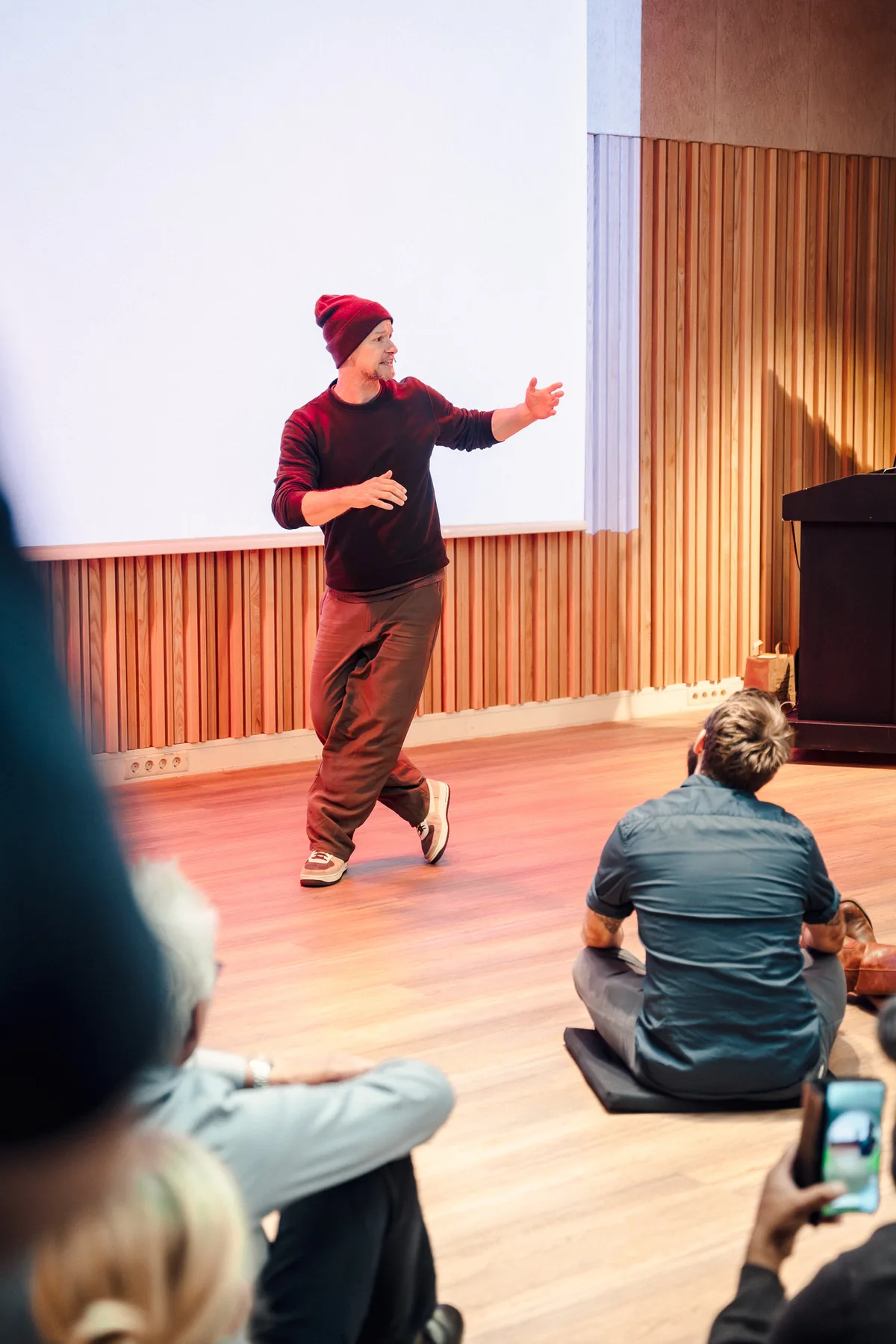
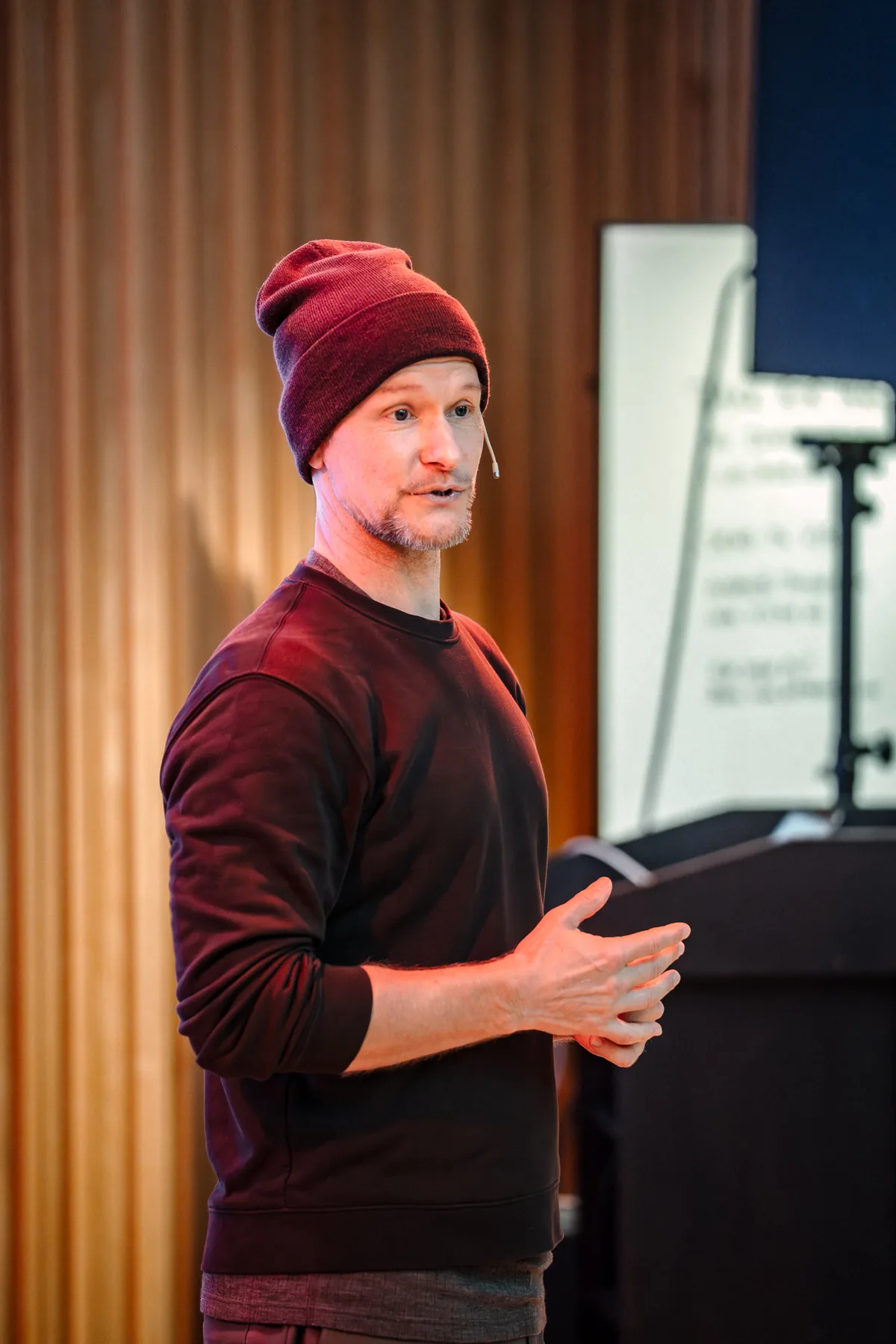
Photo: Joakim Riise
Closer to the core, with a simpler language
The feedback that keeps returning, from the sessions and from the board day in September, points to the same thing: When the language is not complicated, no one is afraid of saying the wrong thing. In an ordinary strategy meeting, the people who already have the words do the talking, and the others wait. Not because they are missing something, but because the cost of getting it wrong feels high.
That is not a side point, it is half the job. I have been inside this before, among other things as an adviser on the Norwegian plain language programme, where the aim was that what the public sector writes to people should actually be possible to understand. The same mechanism in both places: A language that keeps people at a distance also keeps them outside the decision.
The body does the opposite. It takes you closer to the core, and closer to the experience the whole thing is about, instead of around it.
It became much clearer to me than I had expected, and it was the different parts of the workshop that did it. Very, very good. Actually perfect.Linn Cathrine Lunder, chair of the board at Sentralen
The continuation I added myself: And we are not finished. As in tennis, the match is not over until the last ball has been played.
This is not a softer form of strategy. It is a shorter route to the core.

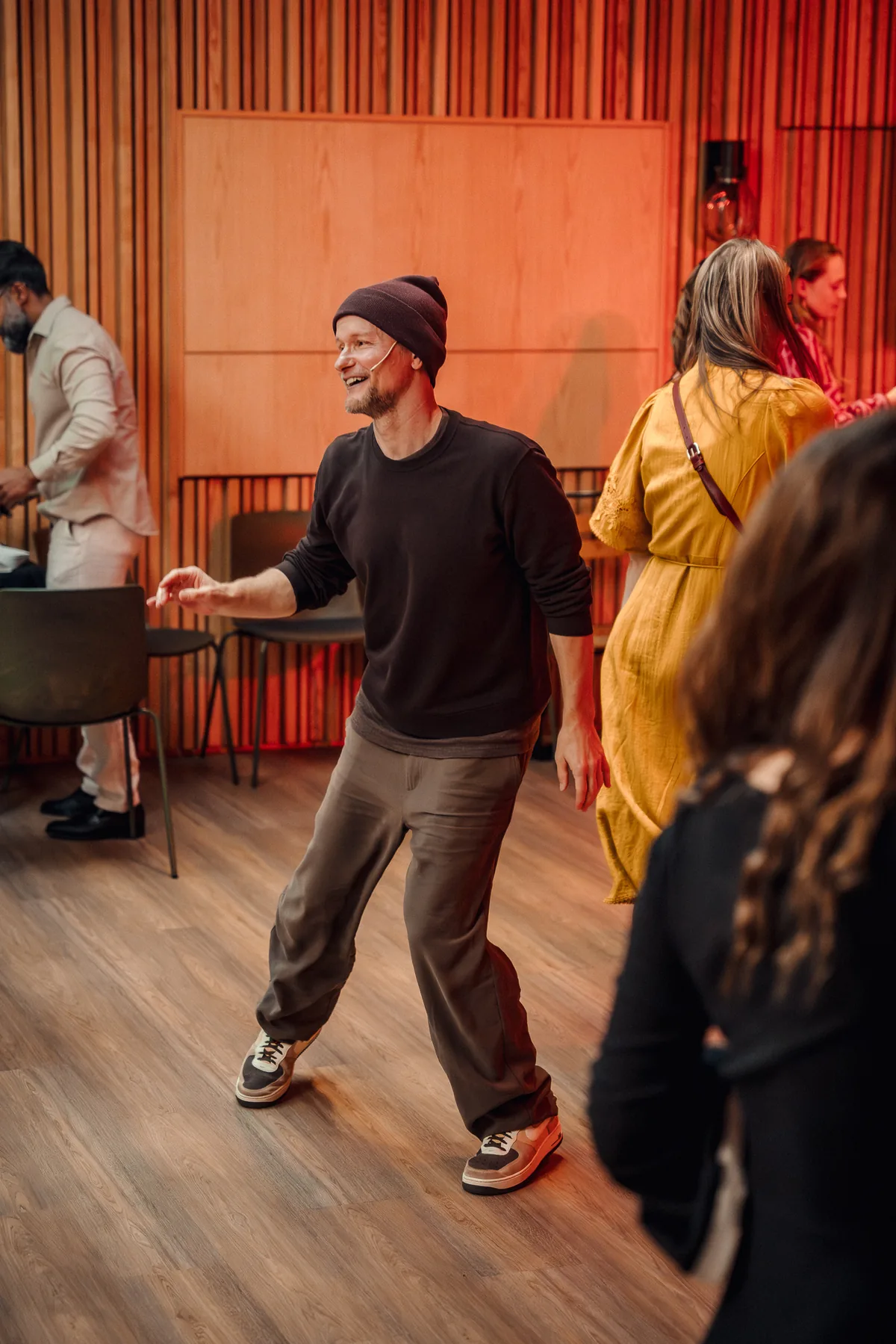

Photo: Joakim Riise

Where the structure meets the people
The first phase is complete. The process now stands in what I call the space between: The material has to be laid side by side, the patterns have to be found, and it has to be written into a framework that holds up in a boardroom.
But that is not where the real work lies.
The work is to connect two things that usually live apart. On one side the structure, the language a strategy is written in. On the other side the force that already exists in the people who work in the house, in those who use it, and in what they achieve when they stand together.
Because a strategy is two things at once. It is the drive they already have, and it is what they want to achieve. The most important part lies in neither of them, but in the distance between. That distance is what makes an organisation move, exactly as it was the space between the sticks that made the figure move.
That is where the purpose lives. Not in what we are, and not in what we are going to become, but in the movement between.
That is why a purpose works now, and not only at some point in the future. It is something we do, and something that happens to us, at the same time. We move, and we are moved.
So I will ask you, if you have been part of something similar: Have you seen a strategy that genuinely moves, both the people inside the organisation and those outside it? What made the difference?
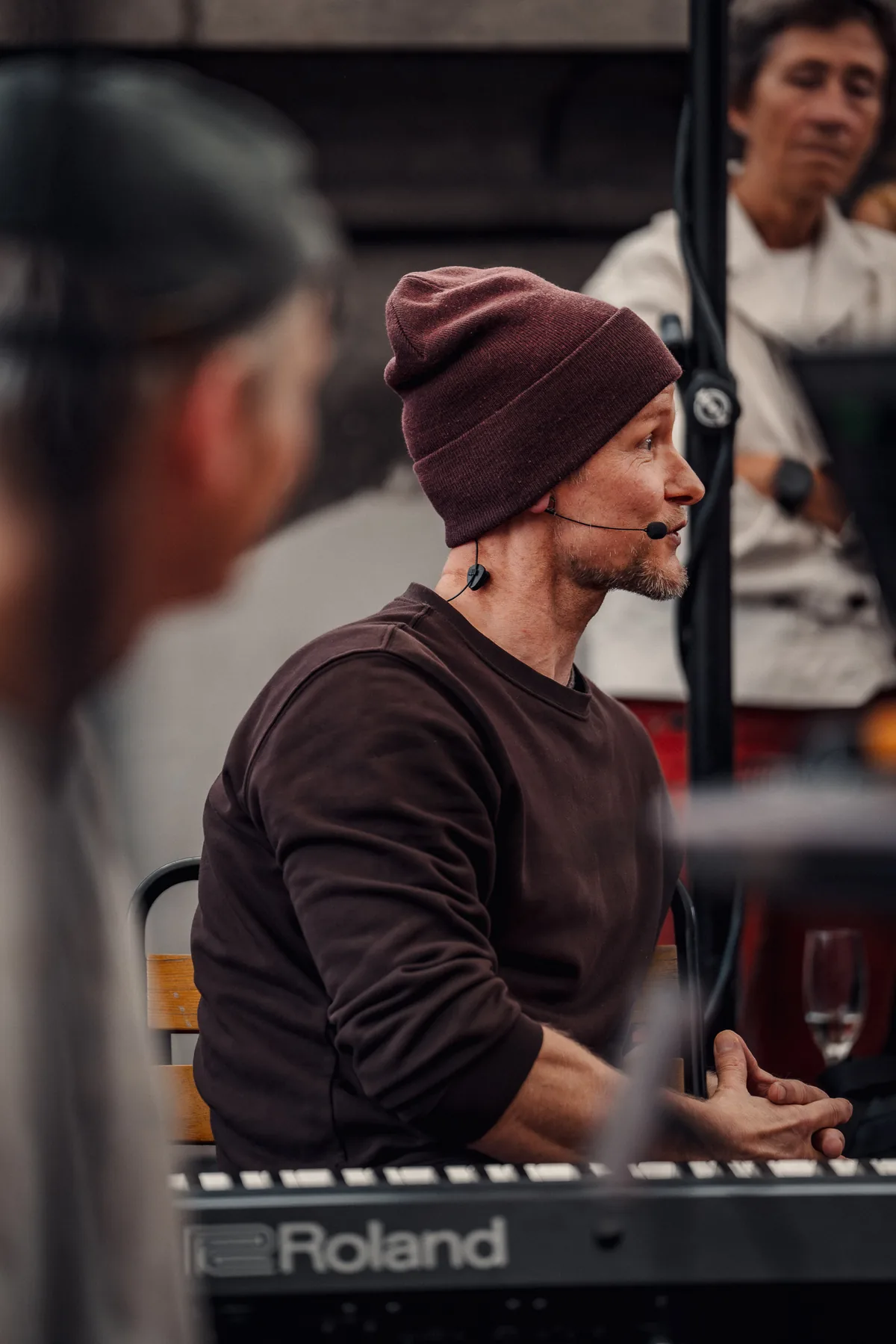
The next chapter comes once the synthesis phase is finished. Photo: Joakim Riise.